Welcome to Light On Light Through, Episode 382, in which I review the second season of American Rust.
- written blog post review of the second season of American Rust

Welcome to Light On Light Through, Episode 382, in which I review the second season of American Rust.
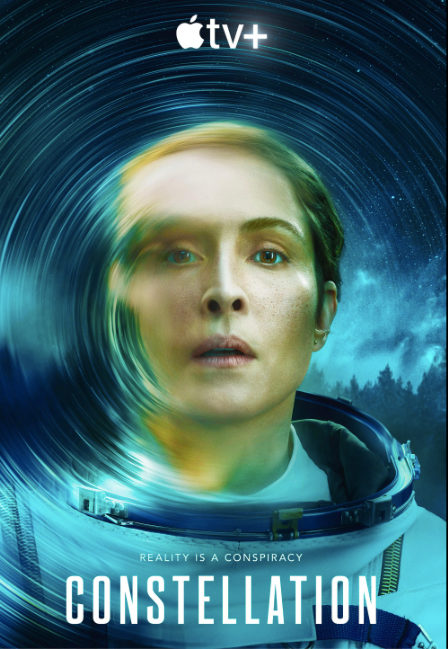
I've read and seen many alternate reality stories. Some are caused by quantum entanglement -- the mega version of two subatomic particles colliding and then moving in opposite directions but still intimately and instantly connected -- and some just happen or are already there. I just reviewed a movie with that schema, and have written a few double realities stories and a novel with that premise myself. But none explore the existence and impact of that on families the way that Constellation does. Indeed, none do much of that at all in the at once deep and startling way that this new series on Apple TV+ does.
[Some spoilers ahead ... ]
The title and the start of the series makes you think it's a story about space travel. But space is just the catalyst for a powerful, heart-tugging story that takes place right here on Earth. Jo is an astronaut on the International Space Station, which suffers a devastating accident. Most of the astronauts, cosmonauts, and space travelers from Europe manage to return to Earth. Jo and Paul are left on station. Paul dies of his injuries. Jo manages to get back to Earth, and that's when the fun begins. That is, fun for us, quite the opposite for Jo and her family.
Jo soon discovers that things aren't quite the same with her family as when she left for the voyage to the ISS. Her husband Magnus is surprised with how much Jo seems to like him. Her daughter Alice doesn't seem quite the same person. We soon learn that this voyage to space has split Jo's reality into two -- literally. There are, or were, two Jo's, two Magnus's, two Alice's. We hear about macro quantum entanglements. In this case, two families, which in fact are two versions of the same family. And things get really crazy when they try to communicate with one another.
There's a history to this -- the strange effect of going out into near space has been happening at least since the 1970s. There's a touch of alternate history, too. There's an Apollo 18 mission (in our reality, the Apollo Program ended with Apollo 17's trip to the moon). But the heart of this carefully crafted narrative is the agony that Jo's two families -- the same family, in two slightly but significantly different versions -- go through as they struggle to make sense of Jo's return from space and what's happening to them.
The narrative is immensely savvy, with winks to all kinds of things. There's a cat that lives and a cat that dies -- the same cat, actually, in alternate realities -- apropos Erwin Schrödinger. Alice lives up to her literary tradition, in wonderland on both sides of the looking glass. And the story is lifted by powerful performances, especially Rosie and Davina Coleman (twins) as the Alices, and Noomi Rapace as Jo. Jonathan Banks as Henry/"Bud" Caldera, an astronaut on that Apollo 18 mission and still very much around in twofold form in the 2020s, puts in an even more memorable than usual crusty performance. And it was good to see Barbara Sukowa as Irena, a cosmonaut whose double plays a crucial role in this story. Hats off twice to Peter Arness (Wallander) who created and wrote the series.
All in all, a thought-provoking, tightly woven, emotionally valent eight episodes of what could well be the first season of more to come, and I won't soon forget in any case.

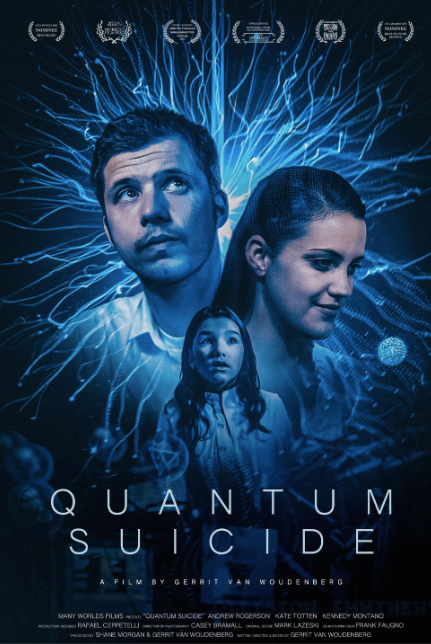
Gerrit Van Woudenberg's Quantum Suicide movie (which he wrote, directed, and -- with Shane Morgan - co-produced) won the Best Sci-Fi Dramatic Feature award at the Philip K. Dick Film Festival last week in New York. I was at the Festival, and moderated a panel with Van Woudenberg, but I had another appointment when the movie was shown at the Festival. Van Woudenberg was good enough to give me the URL for a screener, which I just saw and greatly enjoyed. Herewith a non-spoiler review.
[Big Spoilers ahead ... ]
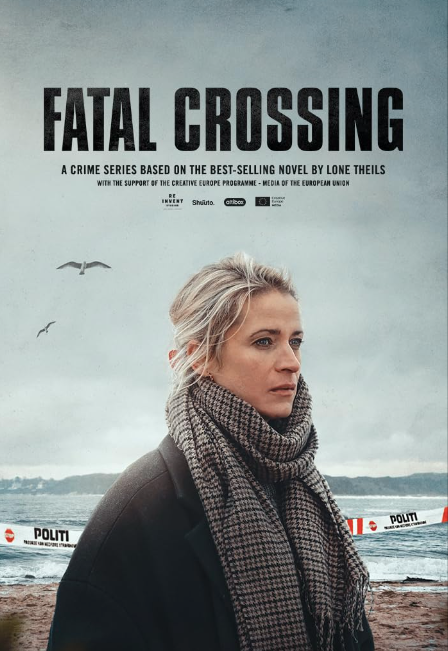
I've heard -- in television shows and movies about serial killers, I've never done any research into them myself -- that female serial killers are very rare. Fatal Crossing, the latest Nordic Noir TV series from Kristine Berg and Arne Berggren, does a masterful job of portraying one, and how she came to be.
The villain, Lisbeth/Jyte, tells her interrogator, the journalist Nora Sand, that she's not afraid of being abandoned, she's afraid of being forgotten. That's as an astute a statement of the obsession with fame that I've come across. As part of Lisbeth's quest for fame, she likes to be quoted. I hope this fictional character appreciates that I've at least paraphrased her.
Fortunately, most people who value fame and enjoy a bit of it, including me, don't achieve it and seek to maintain it by killing people. Lisbeth discovers how much killing attractive young women really appeals to her when she and her best friend Lulu are kidnapped by a man with a taste for harming young women himself, and Lisbeth turns the tables on him, not killing him, but running him and Lulu in support of satisfying her own deadly needs.
We follow the path to discovering this depraved menage a trois via the central character, Nora Sand, an intrepid journalist with her own backpack of emotional baggage. She's played in compelling detail by Marie Sandø Jondal, whom I've never seen before on the screen. Indeed, I've never seen a searcher for serial killers portrayed with quite the range of emotional valence Sand brings to the part.
Berg and Bergson deserve a lot of credit for this, as does Lone Theils, herself a Danish journalist and author of the novel of the same name from which this TV series was adapted. Fatal Crossing is itself the first in a series of novels, and I very much look forward to seeing more of this Nordic Noir with a twist from this team.
See also my reviews of these other Berg and Berggren TV series: Catch and Release and Outlier
And my 2022 interview with Berg and Berggren:
=====
Welcome to Light On Light Through, Episode 381, a special Saturday episode of this podcast, in which Captain Phil and I talk about the Philip K. Dick Film Festival going on today at the Musuem of the Moving Image in Astoria, Queens; a panel I'll be moderating there at 2:40 this afternoon on the Anatomy of a Feature Winning Script; my novel It's Real Life: An Alternate History of The Beatles which has just been published and for which no movie or TV script has yet been written (but a radio play has been adapted from the first chapter, see the links below); Philip K. Dick; and much more.
Welcome to Light On Light Through, Episode 380, in which I review the first season of 3 Body Problem.
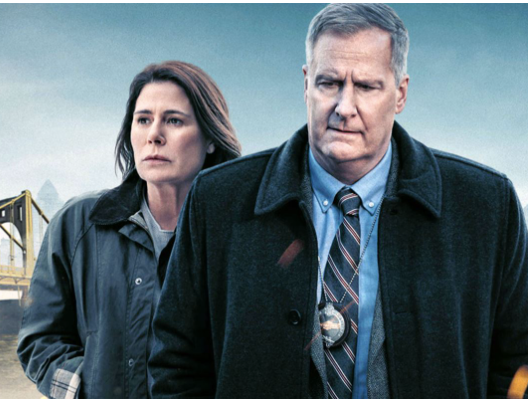
My wife and I really enjoyed the first season of American Rust on Showtime nearly three years ago, and we enjoyed the second season on Amazon that we binged in the past few days even more.
Everything ranging from the dialogue to the plot to even the ending was in high gear in this second season.
[And here now is an advisory about Spoilers in what follows.]
Plotwise, it took a really long time before you could tell who the killer was. And once we found out and he was disposed of, our heroes were challenged by another killer, which led to the high-octane, ambiguous ending.
By high octane, I mean Grace and Del and Billy and family sitting around a dinner table for several harrowing minutes as Fisher gets them in his sniper sights, perched outside. When Billy, now with the benefit of some Army training a marksman, spots a red dot, he goes outside to take care of the sniper. And there second season ends, as we hear a shot ring out. I looked over that final scene several times, and it looks to me that though Fisher is aware that Billy or someone has exited the house, he hasn't had time to refocus his aim on Billy. So if there is a third season -- and I surely hope there is one -- I predict we'll find out that Billy shot and killed Fisher before he got off a shot. (My wife takes a more ambiguous view.) On the other hand, it's certainly also possible that Fisher got off that shot, not at Billy, but at someone inside the house at that dinner table.)
I will say that one problem I had with that great ending is why didn't Fisher shoot at Del or Grace right after he had them in his sights? Of course, I'm no sniper, so maybe that's what snipers do, play around with getting their targets just right.
Meanwhile, another acutely cliff-hanging note near the ending comes when Steve's assistant cop Hannah comes to in the hospital. She was pretty much awake when Del gave Steve his confession. And though Steve was killed by Grace -- another great scene -- and the recording of Del's confession destroyed, Hannah could trigger an investigation of Del and the three murders he confessed to if she remembers what Del said at that moment and anyone in authority believes her. But, optimist that I am, I think even remembering what Del said is fairly unlikely given the bad shape that Hannah was in -- having been shot by Russell and barely hanging on that moment. Also, I assume that even if she remembers what Del said, anyone defending him at a trial could impugn Hannah's testimony, by letting the judge and jury know what condition she was in when she heard or thought she heard Del talking.
Now, I said that the dialogue was in high gear. My favorite line: when Vic walks into the bar with his broken finger in a bandage, and the bartender asks him that perfect, sarcastic question. Not only a great line, but she delivered it with just the right tone of voice.
I read somewhere that Amazon cares less about what reviewers are saying than how many people are viewing a series. Here's hoping that they're legion, and we see a Season 3 before too long.
See also American Rust 1.1-2: Pennsylvania Noir ... American Rust 1.3: Highs and Lows of Life at the Same Time ... American Rust 1.4-5: Tightening Noose and Fraying Relationships ... American 1.6: The Debts ... American Rust 1.7: The Dead Can't Buy Drugs ... American Rust 1.8: Finally, Some Hope ... American Rust 1.9: Needed, Another Season, or at Least Episode
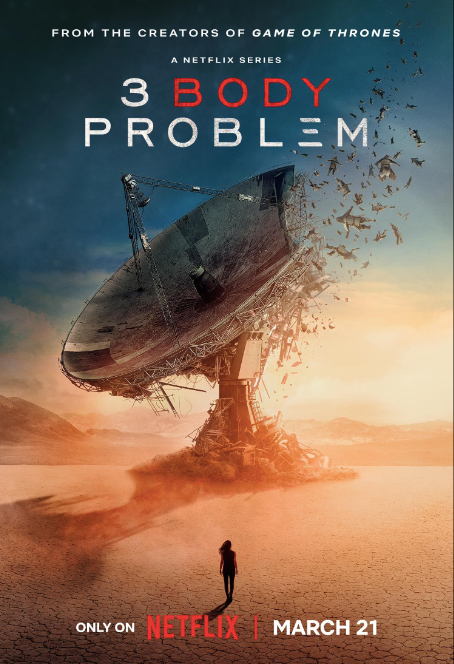
I haven't read the novel by Liu Cixin and its sequels, and I didn't read much about the series because I wanted to be surprised. I'd say the first season of 3 Body Problem was superb -- a powerful mix of thought-provoking, stunning action, and heartbreaking human stories, all in support of a story of a life-threatening interstellar intelligent species, the San-Ti, who have been in contact with our planet for more than 50 years and now are approaching us, some 400 years away from arriving, which may mean the end of our species. And there was a wise and funny joke about Einstein and God which I hadn't heard before.
But almost all of that happened in the last few episodes, and the beginning and middle of the eight-episode first season was bogged down with a computer game the interstellar beings are doling out to various people on Earth for various reasons. I've always enjoyed science fiction about computer games interacting with reality, beginning with Orson Scott Card's path-breaking and brainy Ender's Game, but its situation in 3 Body Problem was needlessly repetitive. The heart of 3 Body was closer to Arthur C. Clarke's Childhood's End and Damon Knight's "To Serve Man" (see this collection of Knight's stories), and the first season of the 3 Body television series, whatever may have been done in the novel, should have spent more time on that. (This slow start is reminiscent of another iconic novel in science fiction, Frank Herbert's Dune, that also took a long time to get going, but once it did was fabulous, and led to not just a trilogy but a whole series, exceeded in excellence only by Isaac Asimov's Foundation novels, in my opinion.)
But speaking of hearts and brains, biology was actually far more the star of the first season than was space travel. This puts 3 Body Problem in a league with Andrew Niccol's debut motion picture Gattaca. If I'm making 3 Body sound derivative, that's because it is, but that's ok, because the first season puts all of these perennial elements of science fiction together in an original, compelling way. It's not every day you see a science fiction series starting in Mao's China and its emphasis on ideology over truth (a problem unfortunately arising now in the United States and other parts of the world, off the fiction screen and for real), moving into a life-and-death James Bondian present fighting for the survival in the future of our very species.
Ironically, the unflattering depiction of intellectual life in Mao's China at the beginning of the 3 Body Problem television series contradicts the warning that five Republican US Senators sent to Netflix in 2020 that the TV series would just be spreading Chinese propaganda. Of course, those Senators and no one other than the creators of the TV series had any idea what would actually be depicted in the TV series, and thus those Senators based their concerns on the novel. The original Chinese publication of the novel indeed did not begin with the jolting scene of a physicist brutally killed in the throes of the cultural revolution -- because he believes in truth over ideology -- but that scene did appear in the middle of the original Chinese novel, and at the beginning of the English translation (Liu Cixin confirms that he wrote the novel with that scene at the beginning). Apparently those US Senators didn't take the time to read the novel before offering their ill-founded concerns about the TV series.
In any case, I don't recall seeing anything quite like this TV series at all, and I'm eagerly awaiting the second season and more. The dialog, by the way, was excellent, as was the acting. Nearly everyone was new to me, other than Game of Thrones' Liam Cunningham, and it was good to see him on the screen again. Kudos to David Benioff, D.B. Weiss, and Alexander Woo for creating the series, and kudos to me for not having to warn you about spoilers in this review, because they really aren't any, are there?
Welcome to Light On Light Through, Episode 379, in which I take you into the Book Launch and reading I did of It's Real Life: An Alternate History of The Beatles, my new novel, based on the award-winning short story of the same name, in the historic Players Club in New York City on March 27, 2024.
A night in which I read the first chapter of my new novel, It's Real Life: An Alternate History of The Beatles, play a little music, introduce a character who appeared in the novel, who was in the audience, and answered all kinds of questions from the audience.
You can get the novel here.
Welcome to Light On Light Through, Episode 378, in which I present the many reasons that banning TikTok in the United States -- or even threatening to ban TikTok in the U.S. -- is a bad idea.
Welcome to Light On Light Through, Episode 377, in which I review the third season of Hightown.
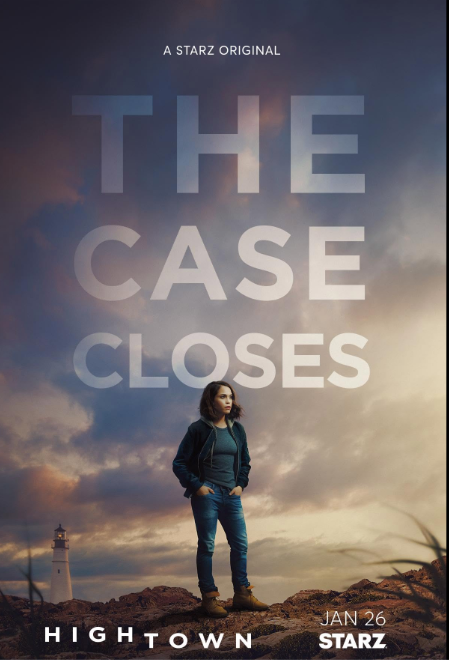
Hightown ended its third and final season on Friday. I thought the season and series finale was the best episode of the season, and the season in turn was the best of the three seasons.
First, as someone who spends several months or more a year on Cape Cod with my family, I'll admit that I was very likely to like the series. But it exceeded all my expectations, beginning with the theme song, "Vacation," the 1980's Textones's rendition of the 1980's Go-Go's song. It's plain and simply my favorite punk rock song, and most of the time the only punk rock I really like.
But let's get to the storyline of the final season.
[Spoilers ahead ... ]
In a phrase, the final episode of the final season wrapped everything up in a way that left a path wide open for a fourth season or a movie somewhere down the line.
I was glad to see Frankie killed. I was glad to see Jackie finally get in a sobre groove -- but I didn't like her siding with Alan against Ray. Hey, maybe that's just me, but I love the relationship Ray and Renee have, and I approve of him doing whatever is needed to protect her.
I'm also glad Osito is surviving and is thriving. Atkins Estimond did a great job in the role, and this is a good time to mention that the acting across the board was outstanding. Just think about the difference between Monica Raymund in Chicago Fire and what she did as Jackie in Hightown, where she delivered an Emmy-worthy performance. James Badge Dale as Ray was memorable, as was Riley Voelkel as Renee. Garret Dillahunt has been memorable on the screen for many years, and came through again as Shane in Hightown.
Let's talk about Hightown picking up the story some time in the future. As I said, there's more than enough room for that. Ray now being in Osito's pocket is more than enough for a season right there. It's the price he had to pay for protecting Renee., and it's a ticket for a future in the series. Jackie as a clean cop is a good story, made all the more powerful that she turned on Ray. In a new season or movie, I'd expect her to revisit that wrong decision.
Big thanks to everyone for putting together this unique and uniquely satisfying series, which I look forward to seeing some more of, someday.
See also Hightown 2.1: Switching Ups and Downs ... Hightown 2.2: Some of My Favorite Things ... Hightown 2.3: Dinners and Almost Dinners ... Hightown 2.4: Approaching Midseason Predictions ... Hightown 2.5: Bullets and Love ... Hightown 2.6: True Love and Deception ... Hightown 2.7: Getting Down to Business ... Hightown 2.8: The Devil His Due and Therapy for the Soul ... Hightown 2.9: Heroes and More Seasons ... Hightown 2.10: Brilliant End-Up, Looking for 3
And see also Hightown 1.1: Top-Notch Saltwater and Characters ... Hightown 1.2: Sludge and Sun ... Hightown 1.3: Dirty Laundry ... Hightown 1.4: Banging on the Hood ... Hightown 1.5-6: Turning Point and the Real True ... Hightown 1.7: Two Things ... Hightown 1.8: Up and Down and Up

Welcome to Light On Light Through, Episode 376, in which I interview Dan Abella in George's Cafe in Manhattan about The Mind Revolution Experience (March 14, 7-9pm at The Producer's Club, 358 W. 44th Street, NYC) and the upcoming Philip K. Dick Film Festival (April 4-7, Musuem of the Moving Image, and other places in NYC).
Welcome to Light On Light Through, Episode 375, in which I interview Richard Sparks about his new novel, New Rock, New Role, as well as the joys and woes, the trials and tribulations and triumphs of the writerly life.
More about New Rock, New Role
Welcome to Light On Light Through, Episode 374, in which I review the fourth season of True Detective on HBO Max.
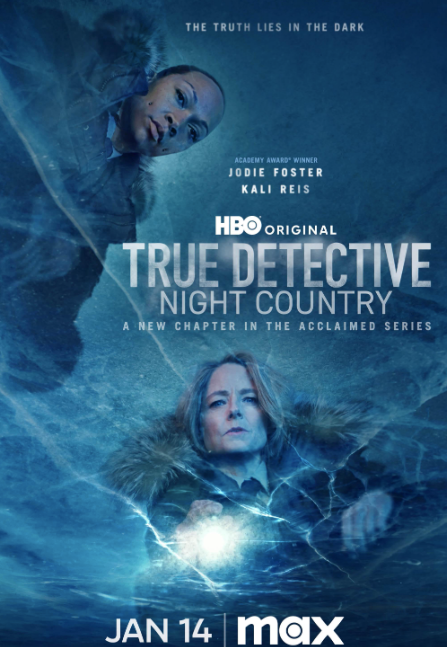
I'm going to start this review of the concluding episodes -- 4 to 6 -- of the fourth season of True Detective on HBO Max by telling you what I really didn't like about the ending.
And therefore warning you about spoilers ahead ...
Tsalal was trying to get a cure out of the ice. More specifically, the DNA of some extinct microorganism which could lead to a cure of a host of deadly and debilitating human diseases. In my book, both as an appreciator of science fiction and someone who would like to see more people healthy -- especially given the pandemic that's been around since late 2019 -- I think Tsalal's goal was a worthy one indeed.
In order to get at these long gone microbes and their DNA, some of the permafrost had to melt. And pollutants helped that melt along. Unfortunately, the same pollutants cause plenty of death and debilitation of their own. So the people who lived in that part of Alaska killed the scientists at Tsalal. It started with one person, Annie K, attacking the scientists. Rather than just stopping her, the scientists killed her. And Annie's people in turned killed the scientists.
The story is a little more complicated than that, I know, but that's the jist of it. And because of what I said about the cure, as both a great element of a science fiction story, and something we could really use in reality, I wish this fourth season of true detective could have come up with more, with some way of ending the season with some hope that perhaps the cure could be salvaged.
Other than that, I thought the season was outstanding. What Pete did to his father was well deserved. The ambiguous ending of maybe Navarro walked off into the snowy wild or that was just Danvers' cover story to protect Navarro was well played. And the cold and the darkness that dominated the story until very end was so well presented I'm still shivering at least a bit.
I'm up for another provocative, disturbing season of True Detective whenever it arrives.
See also True Detective 4.1-4.3: Alaska, with a Touch of Science Fiction
And see also True Detective 3.1-2: Humanistic Disturbances of the Soul ...True Detective 3.3: Unquestioned Witnesses ... True Detective 3.4: All Hat, No Answers ... True Detective 3.5: Tour de Force Scene in the Present ...True Detective 3.6: Great Conversations ... True Detective 3.7: Merge! ... True Detective 3.8: The Best Ending
And see also Season Two: True Detective: All New ... True Detective 2.2: Pulling a Game of Thrones ... True Detective 2.3: Buckshot and Twitty ...True Detective 2.4: Shoot-out ... True Detective 2.7: Death and the Anti-Hero ... True Detective Season 2 Finale: Good Smoke but No Cigar
Welcome to Light On Light Through, Episode 373, in which I review the second season of Reacher on Amazon Prime Video.
Welcome to Light On Light Through, Episode 372, in which I review The Greatest Night in Pop: The Untold Story Behind 'We Are the World'.
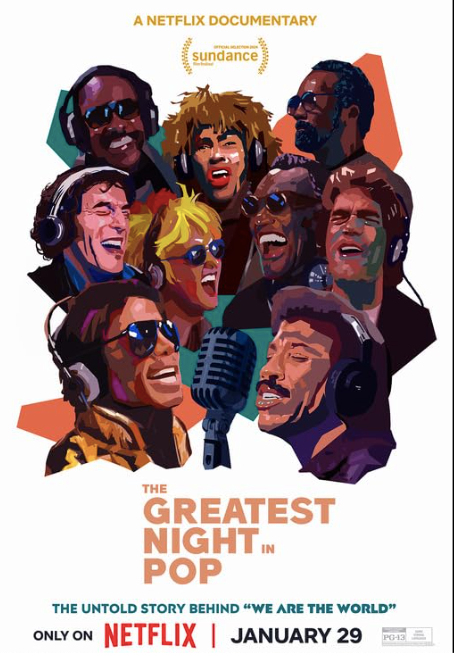
There's almost nothing as satisfying on the screen as seeing a documentary that shows you how something else you saw and on the screen and loved was put together. The Greatest Night in Pop does that with the 1985 video and recording, "We Are the World". In part because our family was just getting started, in part because we cared about feeding people in need of food, in part because we were fans of so many of the artists who made that music, the video has been among my wife's and my favorites since the day we first saw it in March 1985. It still brings tears to our eyes. As did The Greatest Night in Pop documentary, many times.
As we were watching it on Netflix the other night, I realized what an important kind of new video and recording the 1985 performance brought into being. Not a concert of great artists, but a single song performed by great artists. The performance of George Harrison's "As My Guitar Gently Weeps" in the 2004 Rock 'n' Roll Hall of Fame inductions with Tom Petty, Stevie Winwood, and Prince (who delivers the best guitar playing I've ever seen) is even better than the Beatles' original recording, and owes a debt of gratitude to the way "We Are the World" brought together more than two score of artists nearly two decades earlier to make such eternal music.
Prince didn't make it to that recording, though he was very much desired, and The Greatest Night in Pop tells us at least a part of that story. It also shows how Dylan, not really getting how he fit in the recording, sung his part perfectly after Stevie Wonder did a good mimic of Dylan singing like Dylan had in his heyday in the 1960s. Cyndi Lauper, understandably nervous in the company of such greats, belts out a great line and ends with a "yeah, yeah, yeah". She wonders if that was ok and is assured by Quincy Jones that it was just right. The key of the song was of course right for some of the singers but not for everyone. Bruce Springsteen, coming to the recording session with a hoarse voice just after a tour, sounds like he has "broken glass" in his throat, as someone remarks. But it's just right for the subject of the recording. Michael Jackson, who co-wrote the song with Lionel Richie, wants to add a "sha-la-la" to the chorus. Smokey Robinson tells us in current time, when the documentary was recorded, how he had lots of experience working with Michael Jackson at Motown, and we see him walk up to Jackson in the "We Are the World" recording studio and talk him out of the "sha-la-la". Diana Ross says how much she loved Daryl Hall's singing. Who knew?
The Greatest Night in Pop is a treasure-trove of such nuggets of musical history. I expect my wife and I will be watching it a lot more than once.
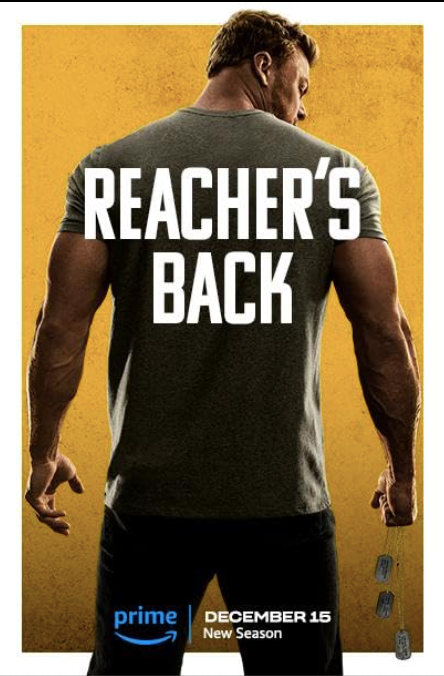
Hey, I liked Reacher 2 even better than Reacher 1, which means I immensely enjoyed every moment in the eight-episode second season, and my only regret is that I couldn't watch the eight episodes all at once, and keep the adrenalin flowing for the nearly eight hours. (Right, I watched each episode as it was put up on Amazon Prime Video, and saw the finale episode a few weeks back, but didn't get around to reviewing it until now.)
And adrenalin is the word for this second season of Lee Child's book series brought to life, which I haven't read. There's barely a minute or two that goes by in any episode without maximum octane action, punctuated with Reacher's razor-sharp commentary and rapid-fire retorts. People get pushed out of helicopters, have high-speed car chases, and exchange gunfire and physical blows in a plot that brings back Reacher's military team that we meet for the first time. This opens up all kinds of possibilities ranging from a rekindled (or, actually kindled) romantic relationship, more humor, and some rivalries.
One of my favorite threads in this sharp suit of a story involves the NYPD detective Guy Russo played by the one and only Domenick Lombardozzi (The Wire, Ray Donovan, etc). Since I'm trying hard to not provide any spoilers -- it gets tedious warning you about them, I know -- I'm not going to tell you anything specific about how Russo's story plays out, except to say it's one memorable story that you're not going to forget.
The villain, Shane Langston played by Robert Patrick, is memorable, too, one of the most driven, vicious evil masterminds I've seen on the screen in a long time. As I said in my review of Reacher 1, Jack Reacher definitely has some Bondian characteristics, and Langston is close to a worthy Bondian antagonist. Patrick has played many a policeman, of all ages over his long career, and it's good to see him branch out.
Alan Ritchson was perfect again as Reacher, Maria Sten was back and fine again as Neagly, and it was fun to see Serinda Swan in and out of bed with Reacher. Kudos too for Shaun Sipos's wise-cracking David O'Donnell. I have no idea who other than Ritchson will be on hand for season 3, but bring it on.
See also Reacher 1: Peach Pie, Stirred Not Shaken
True Detective is back with its fourth season. So far, as of the first three episodes, it's quite good. Not as brilliant as the first season, which was a masterpiece, but at least as good as the second and third seasons, each in their way memorable. And this fourth season has something which is always especially appealing to me, a touch of science fiction.
The crime involves the disappearance of eight scientists from the fictional Tsalal Research Station in Alaska. In the second episode, it's briefly noted that those scientists were trying to sequence the DNA of an extinct microorganism that could have enormous health benefits for we humans, stopping "cellular decay," "curing cancer, autoimmune diseases, genetic disorders, an absolute fucking game-changer." This sure sounds like some welcome science fiction to me. It's also something that harkens back a little to the not-bad Helix series, which had two seasons on the SyFy Channel back in 2014-2015.
The placement in Alaska also calls forth recollections of all kinds of movies and TV series, ranging from the superb Christopher Nolan 2002 Insomnia with Al Pacino, Robin Williams, and Hilary Swank (what a cast!) to the 2022 ABC-TV series Alaska Daily, also starring Hilary Swank, which was wisely cancelled after one season (I stopped watching it after three episodes).
I've been glued to screen of this season of True Detective, on HBO Max. In Insomnia, the sun never left the sky as Pacino's Detective Dormer struggles to investigate a murder way up north without getting a decent night's sleep. In True Detective, detectives Liz Danvers (Jodie Foster) and Evangeline Navarro (Kali Reis) struggle to solve the crime in just the reverse situation in which the sun in December never rises in Alaska. It's great to see Foster back on the screen, she hasn't lost a beat. This is the first time I recall seeing Reis, and she's putting in a strong performance, too. The supporting cast is good, as well, with Finn Bennett as Peter Prior the rookie cop and Isabella LeBlanc as Danver's daughter Leah especially notable. I also for some reason liked Donnie Keshawarz as James Bryce, the high school teacher and Danver's former lover, maybe because he delivered the incredible news about what DNA from the extinct microorganism could do.
The key to the incandescence of the first season was the chemistry between the two detective partners, played Matthew McConaughey and Woody Harrelson. This fourth season of True Detective starts with just the opposite of that between Danvers and Navarro. They have a history, which we gradually learn about, which nearly makes them enemies, and they have to bury the hatchet, at least temporarily, and combine their expertise to work this case.
Like all the seasons of True Detective, there's a degree of gore which I could live without in a TV series or a movie. Also an element of mystical horror which is not my cup of tea, either. But the science fictional element makes up for that in this fourth season, and I'm very much looking forward to the rest.
And ... hey, I didn't even have to warn you about spoilers.
See also True Detective 3.1-2: Humanistic Disturbances of the Soul ...True Detective 3.3: Unquestioned Witnesses ... True Detective 3.4: All Hat, No Answers ... True Detective 3.5: Tour de Force Scene in the Present ...True Detective 3.6: Great Conversations ... True Detective 3.7: Merge! ... True Detective 3.8: The Best Ending
And see also Season Two: True Detective: All New ... True Detective 2.2: Pulling a Game of Thrones ... True Detective 2.3: Buckshot and Twitty ...True Detective 2.4: Shoot-out ... True Detective 2.7: Death and the Anti-Hero ... True Detective Season 2 Finale: Good Smoke but No Cigar
Welcome to Light On Light Through, Episode 371, in which I join Captain Phil on WUSB-FM Radio (Stony Brook, New York) and Marybeth Ritkouski, Michael Rizzo, Bruce Playfair, and Colleen Bement in a 2+ hour in-depth, fun discussion of For All Mankind, Seasons 1-4, on Apple TV+.
Welcome to Light On Light Through, Episode 370, in which I review Law & Order: Special Victims Unit, Season 24 premiere.
Read this review.


